OTD 3 April 1826 - A Concert of “Ancient and Modern Music” Announced

| Type of post: | Choir news item |
| Sub-type: | No sub-type |
| Posted By: | Tim O'Riordan |
| Status: | Current |
| Date Posted: | Fri, 3 Apr 2026 |
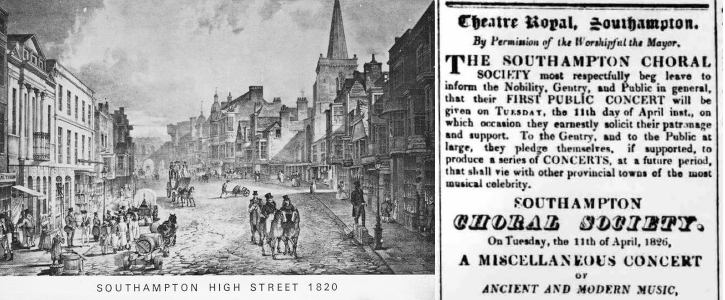
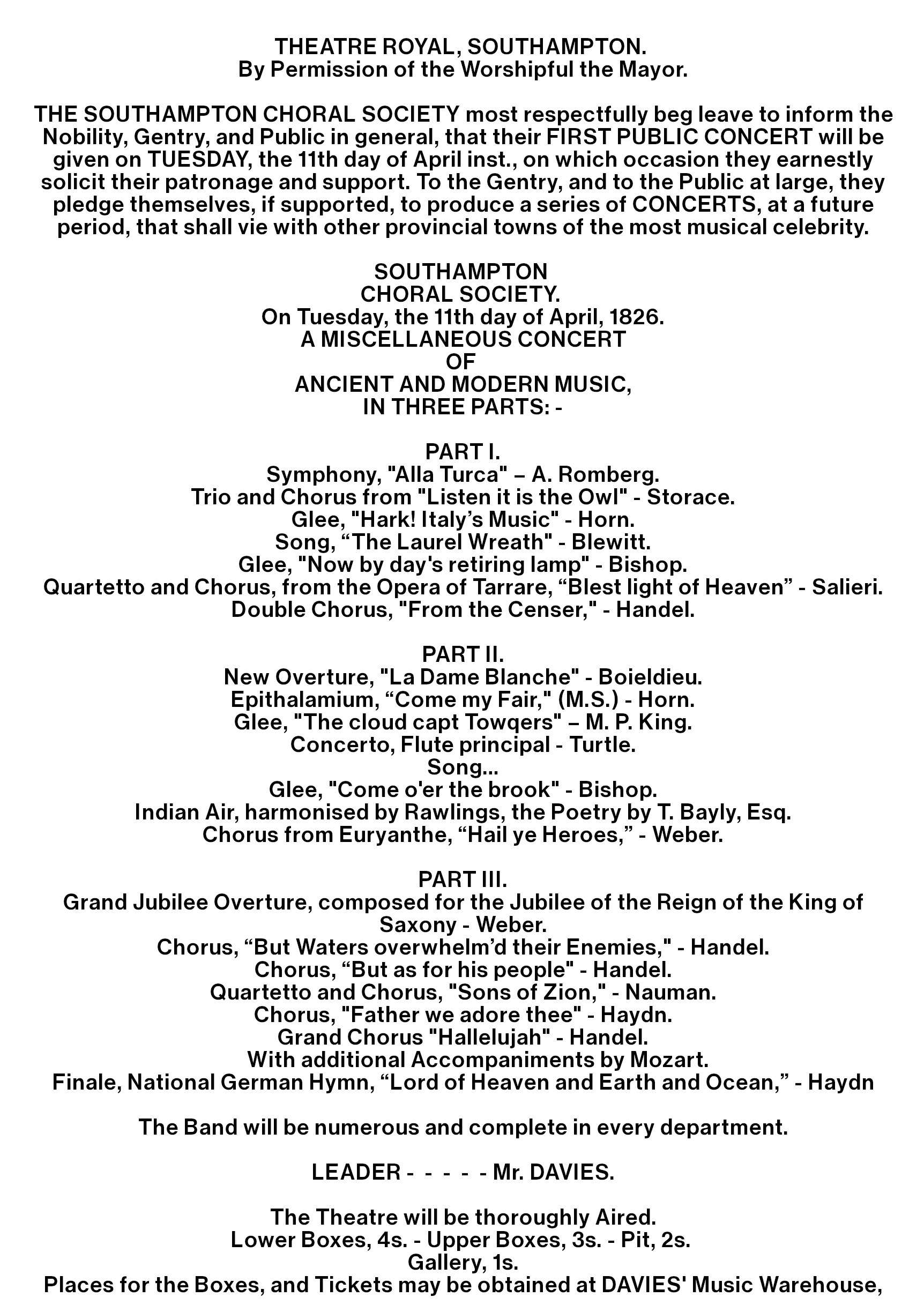
The 1826 concert promised a “miscellaneous concert of ancient and modern music” - a phrase that, in its time, spanned composers we would now firmly classify as Baroque and Classical. Names like George Frideric Handel, and Joseph Haydn appear prominently, forming the backbone of the evening. The inclusion of the “Hallelujah” Chorus and multiple excerpts from Handel’s oratorios underscores how central sacred choral works already were to communal music-making, something that remains true for us today.
Yet the rest of the programme reveals a striking contrast. Alongside these now-canonical figures sit composers such as Antonio Salieri, Carl Maria von Weber, and François-Adrien Boieldieu, represented not by full-scale works but by excerpts, overtures, glees, and songs. The prevalence of glees, a distinctly British part-song tradition, points to a social, almost domestic style of choral singing that differs markedly from the large-scale choral-orchestral works we tend to prioritise today.
Modern choral societies, including our own, typically programme substantial unified works: a complete oratorio, a mass setting, or a themed concert. By contrast, the 1826 audience experienced variety as the central appeal - short forms, operatic highlights, instrumental concertos, and even an “Indian Air” arranged for local taste. It was less about immersion in a single composer’s vision and more about showcasing breadth, novelty, and accessibility.
And yet, there is continuity. The ambition expressed in that 1826 notice, to “vie with other provincial towns of the most musical celebrity”, still resonates. Today’s choral landscape is broader, incorporating contemporary composers, global traditions, and historically informed performance. But the essential impulse remains unchanged: to bring people together through shared musical experience, balancing heritage with discovery.
Further reading
From The Southampton Town and County Herald,
Monday, April 3, 1826
Join our mailing list to keep up to date with our activities and events (Mailchimp)